-
Gross Weight
When we left off, we had almost determined the empty weight fraction, and we’re finally ready to put all of our efforts together to estimate gross weight. Before we do that, though, let’s review the ground we’ve covered so far. Here is what we know (or have assumed) about the airplane: performance cruise speed (target)…
-
Empty Weight Fraction
The last thing we need to do before estimating gross weight is to figure out the empty weight fraction. So how do we do that? Well it turns out that there is a relationship between the empty weight fraction (y-axis of the graph below) and the gross weight (x-axis) of airplanes. Here we’ve plotted a…
-
Fuel Fraction
Fill ‘er up! Now we estimate fuel fraction using a modified form of the Breuget equation. We’ll go through the variables one-by-one. $$ \scriptsize \frac{W_f}{W_0} = 1-0.975e^{\frac{\normalsize -R \> c_{bhp}}{\normalsize 550 \> \eta_p \> L/D}} $$ Range Our desired range is 650 mi, but I’d like to have a 45-min. reserve in addition to that.…
-
Weight Fractions
Weight is a big deal. We start the design of an airplane by estimating the gross weight (takeoff weight, , or “w-naught”) because weight plays such a significant role in almost everything an airplane does. A heavier airplane means: In short, it’s often said that weight is the enemy. Weight fractions Let’s start with some…
-
Lift-to-Drag Ratio
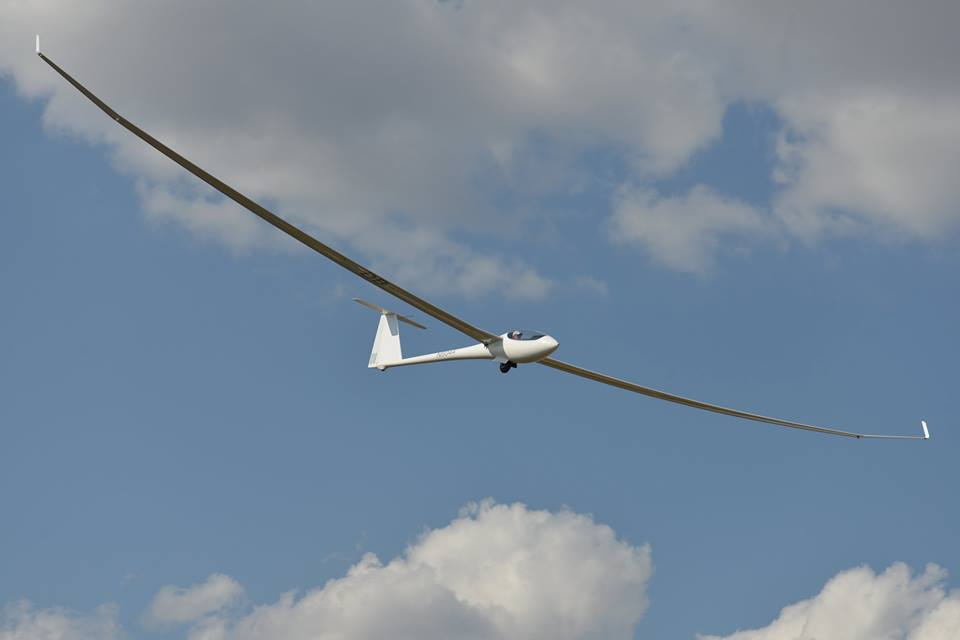
Before we can estimate the airplane’s weight, we need to know a little more about its performance. The lift-to-drag ratio, L/D, is an important figure to estimate because it gives us a relative idea of the amount of drag the airplane has to overcome to keep the airplane aloft in cruise configuration. Let’s go through…
-
Power Loading
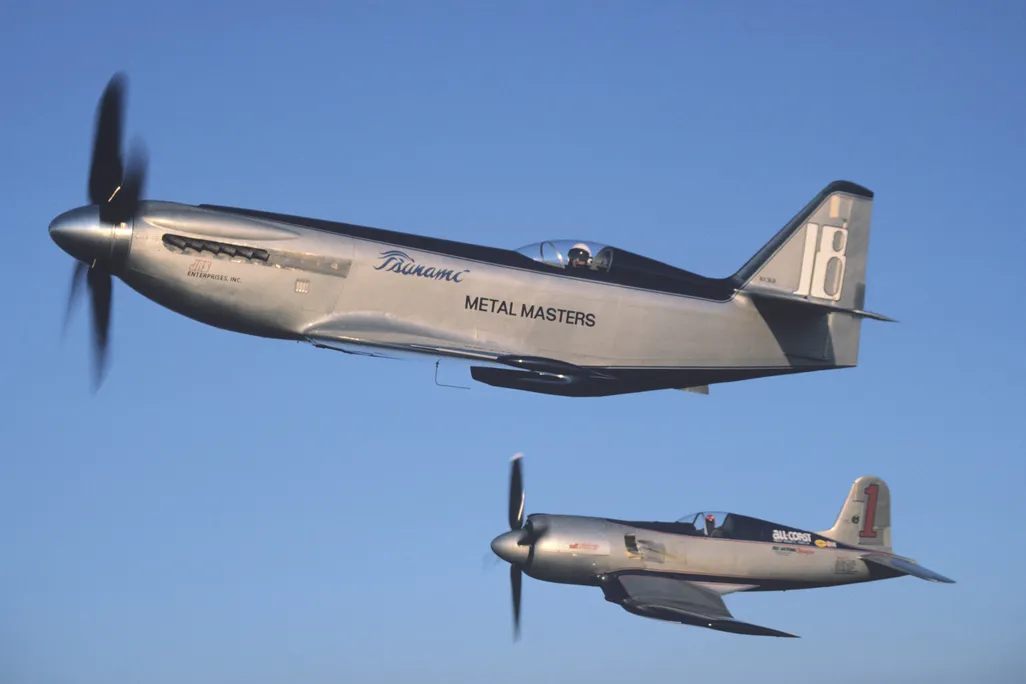
Power loading is the figure that tells us how many pounds of weight each horsepower the engine produces has to drag around (lb/hp). It can be a little counterintuitive because an extremely powerful airplane like Tsunami (above) has a much smaller number for power loading (7,200 lb / 3,500 hp = 2.1 lb/hp) than a…
-
Wing Loading
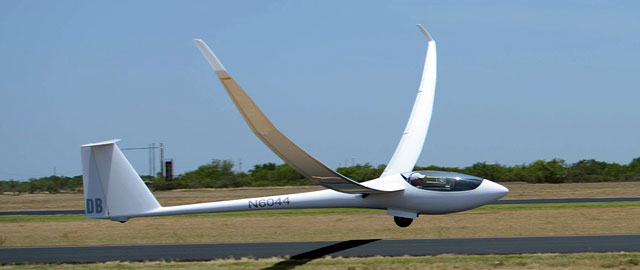
Wing loading, measured in lb/ft2, is basically a measure of how hard the wing has to work to keep the airplane in the air. A lightly-loaded wing has the advantages of a lower stall speed and the ability to achieve a higher turn rate. On the downside, low wing loading can result in a bumpier…
-
Define the Mission
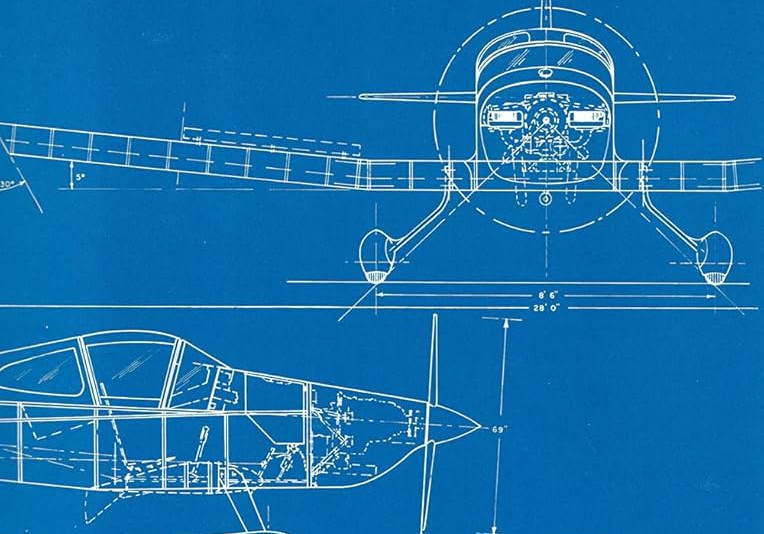
Where do we start? You might think that a sketch is a good place to begin. But it turns out that airplanes are shaped more by physics than the imagination of the designer, and the realities of aerodynamics and structures and the materials you’re working with will quickly shape that awesome first sketch into something…